
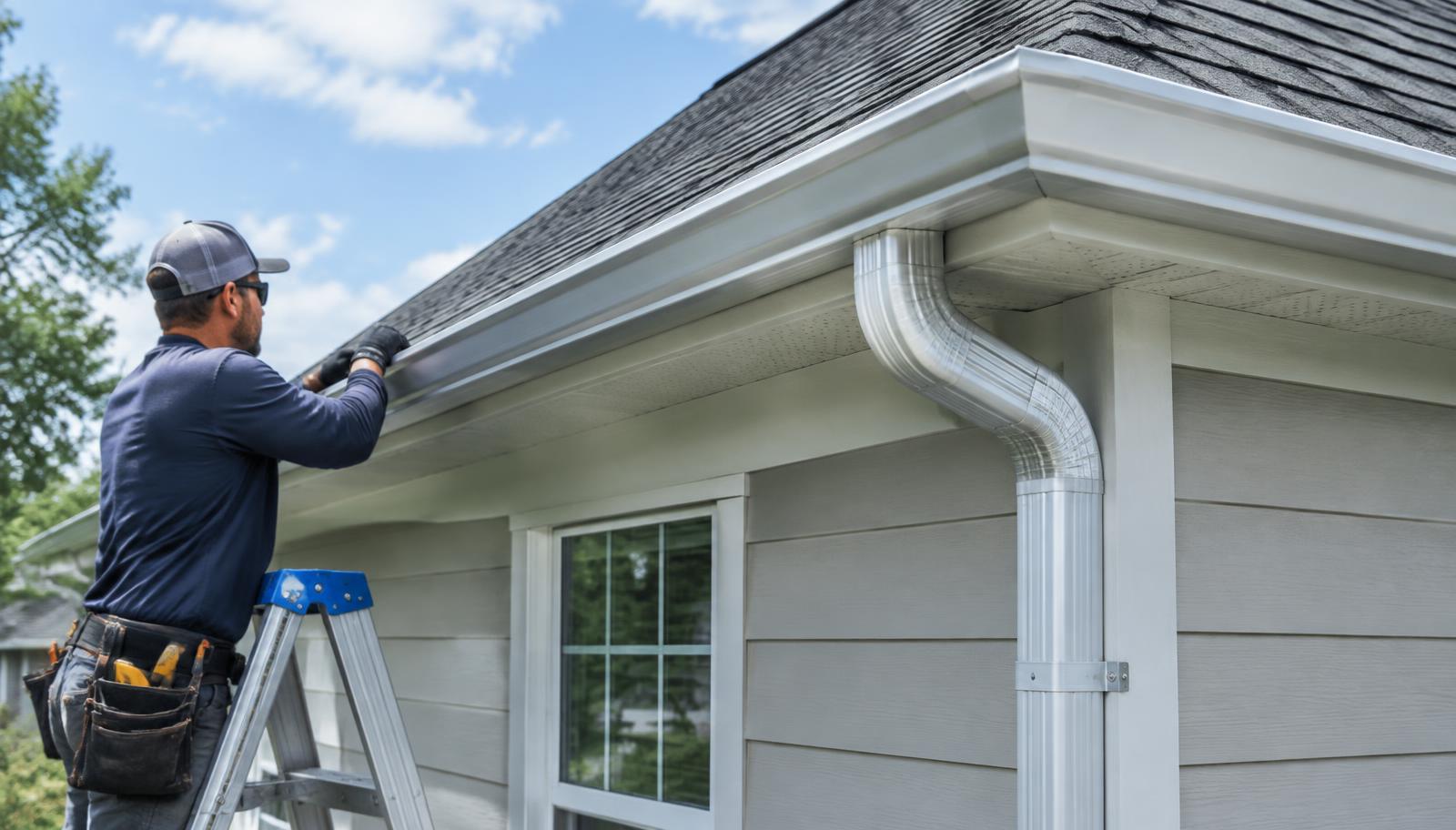
Gutters
How Bad Gutters Quietly Cause Expensive Damage
“Can gutters really cause foundation problems?”
Updated August 26, 2026 · 5 min read
The short answer
Yes. Gutters that overflow, sag or discharge next to the wall put large volumes of water directly against the foundation, which shows up later as damp basements, damaged fascia and eroded landscaping. Fixing the water path is almost always the correct first step.
Key takeaways
- Watch the roofline during heavy rain — that is the real inspection.
- Downspouts should discharge well away from the wall.
- Grading matters as much as the gutter itself.
- Interior waterproofing before exterior drainage is usually the wrong order.
What to look for in heavy rain
Stand outside during a downpour. Water spilling over an edge, sheeting behind the gutter, or pooling at a downspout tells you more than any dry inspection.
- Overflow at a specific length or corner
- Water running behind the gutter onto fascia
- Downspouts discharging within a metre of the wall
- Soil sloping back toward the house
- Stains or erosion lines along the foundation
Repair, or replace the system
Isolated leaks, loose fasteners and short damaged runs are repairs. Wrong pitch across long runs, undersized capacity, corrosion or repeated failure after storms usually mean the system should be replaced properly.
Order the work correctly
Address the roof and gutters, then the discharge point, then grading, and only then consider interior work. Doing it the other way round means paying twice for the same damp patch.
Common questions
Quick answers homeowners ask next.
- Are gutter guards worth fitting?
- They reduce cleaning frequency in leafy locations but do not remove maintenance entirely. Fix pitch and capacity problems first.
- How far should a downspout discharge from the house?
- Further than most homes manage. Extensions that carry water clear of the foundation are inexpensive and unusually effective.
- How often should gutters be cleaned?
- Twice a year is a common baseline, more with overhanging trees or after storms.
Where to go next