
Roofing
Repair or Replace Your Roof? How to Tell the Difference
“Does this roof need repairing or replacing?”
Updated August 22, 2026 · 8 min read
The short answer
Key takeaways
- One leak in one place is a repair conversation.
- Leaks in several places, or repeat leaks, point to system failure.
- Soft or delaminated decking changes the scope entirely.
- Ask for photographs of the actual damage before approving either option.
What a roofer is really looking at
A useful inspection covers more than the shingles. Flashing at walls and chimneys, valleys, penetrations, ventilation and the condition of the decking all decide whether a patch can hold.
Most leaks that come back were never shingle problems in the first place — they were flashing or detail problems that a surface repair could not solve.
- Where water is entering, not just where the stain appears
- Granule loss across the whole slope versus one area
- Flashing condition at every transition
- Whether the deck feels firm underfoot
- Ventilation, which quietly shortens roof life
When repair is the sensible answer
If a storm lifted shingles on one slope, the rest of the roof still has years of service, and there is no history of recurring leaks, a well-executed repair is normally the proportionate response.
Ask for the cause in writing. A repair that does not name the cause is a guess with an invoice attached.
When replacement is honest, not upselling
Widespread granule loss, brittle or curling shingles across multiple slopes, several leaks in different locations, or wet decking all suggest the system has reached the end of its usable life. In that situation repeated patching costs more over five years than replacing once.
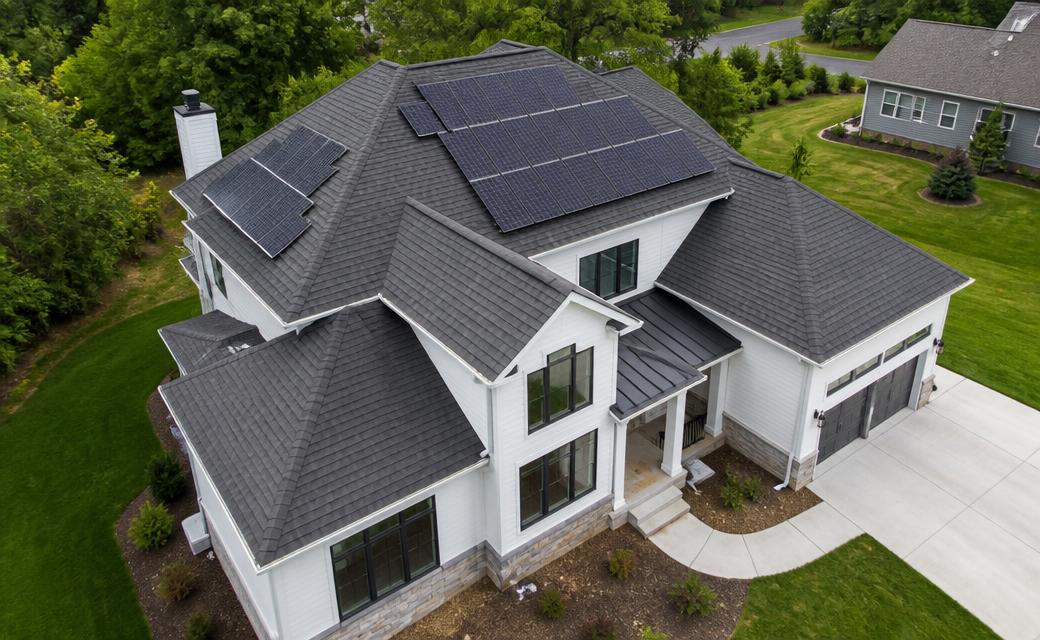
If you are also considering solar, replacement timing matters: it is far cheaper to replace the roof before panels go on than to remove and reinstall them later.
How to keep the decision yours
Ask for photos, ask what happens if you wait one more season, and ask what the repair warranty covers. A contractor who can answer all three without pressure is giving you information rather than a sales close.
Common questions
Quick answers homeowners ask next.
- How long should a roof last?
- It depends on material, ventilation and climate. Age is a prompt to inspect, not a reason to replace on its own — condition decides.
- Can I replace only one slope?
- Sometimes, and it can be reasonable after localised storm damage. Expect a visible colour difference and confirm how the transition is detailed.
- Will insurance cover a roof replacement?
- Storm damage is often covered while age-related wear usually is not. Document the damage with dated photographs before any work starts.
Where to go next